
"Nuts and bolts": interactive exibits

Exhibit development & fabrication

Designs & performance specifications

Discovery Disks: mobile mini-interactives

Underwater Street Discovery Centre

Moscow Planetarium

Sellafield Visitor Centre

'Alternative energy'

Earth Science

Fixed Discovery Disks, Glasgow

Air-table, telescope, moon-phases

Astronomy exhibits for Valencia

Biometrics

Magnetic field exhibit for CERN, Geneva

Tabletop Discovery Disks: magnetism

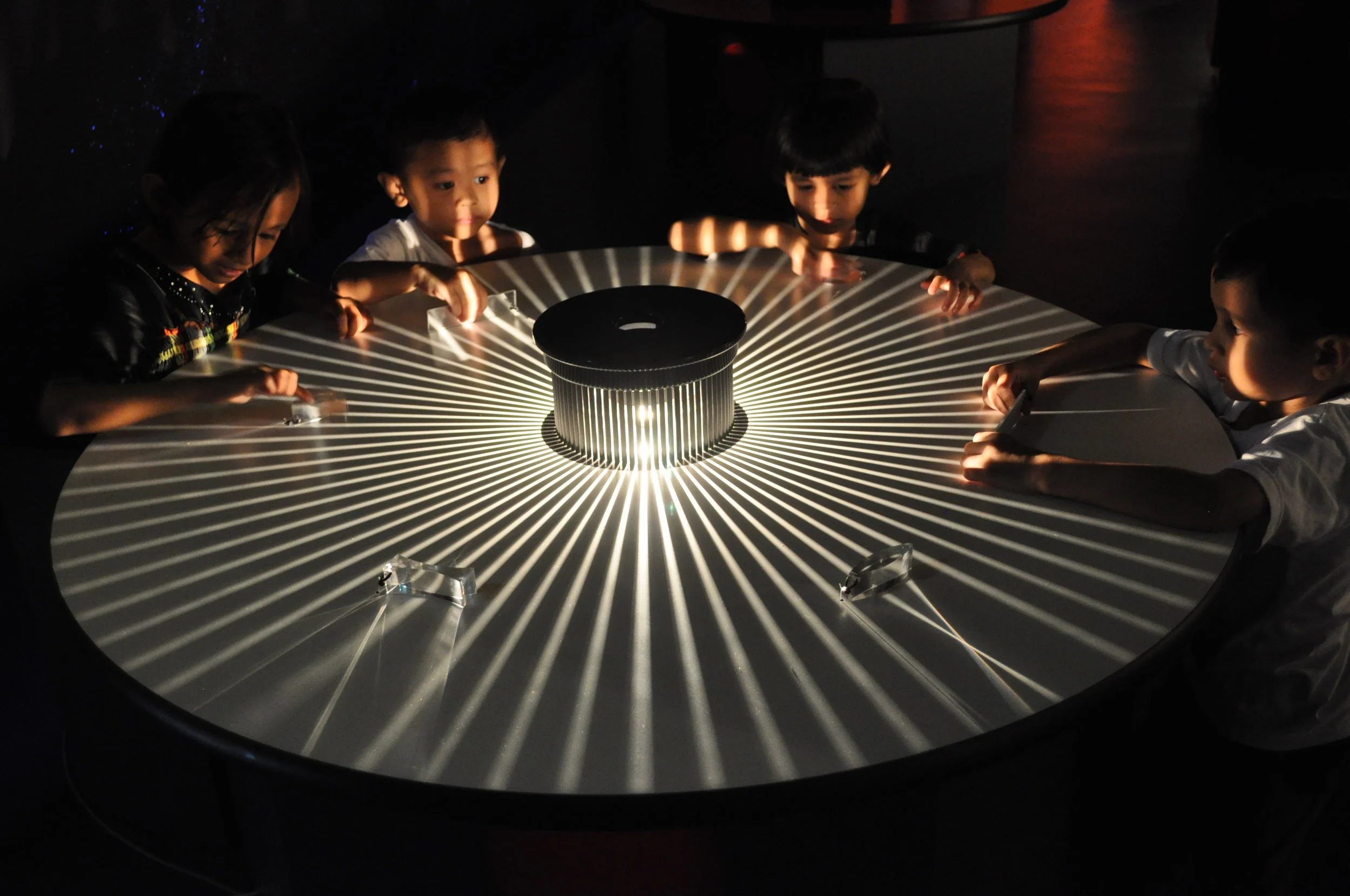
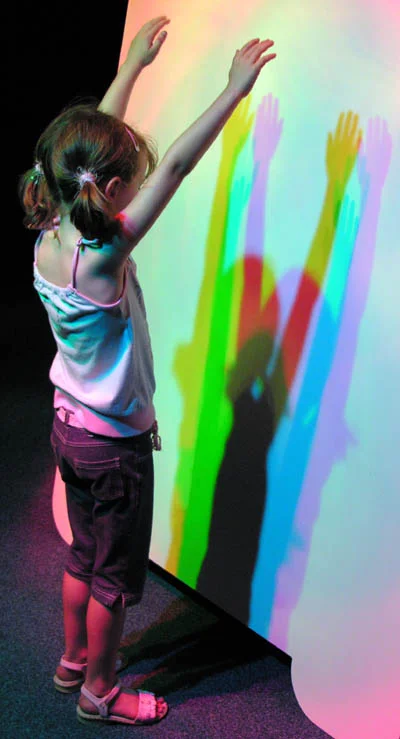
Tabletop Discovery Disks: Light

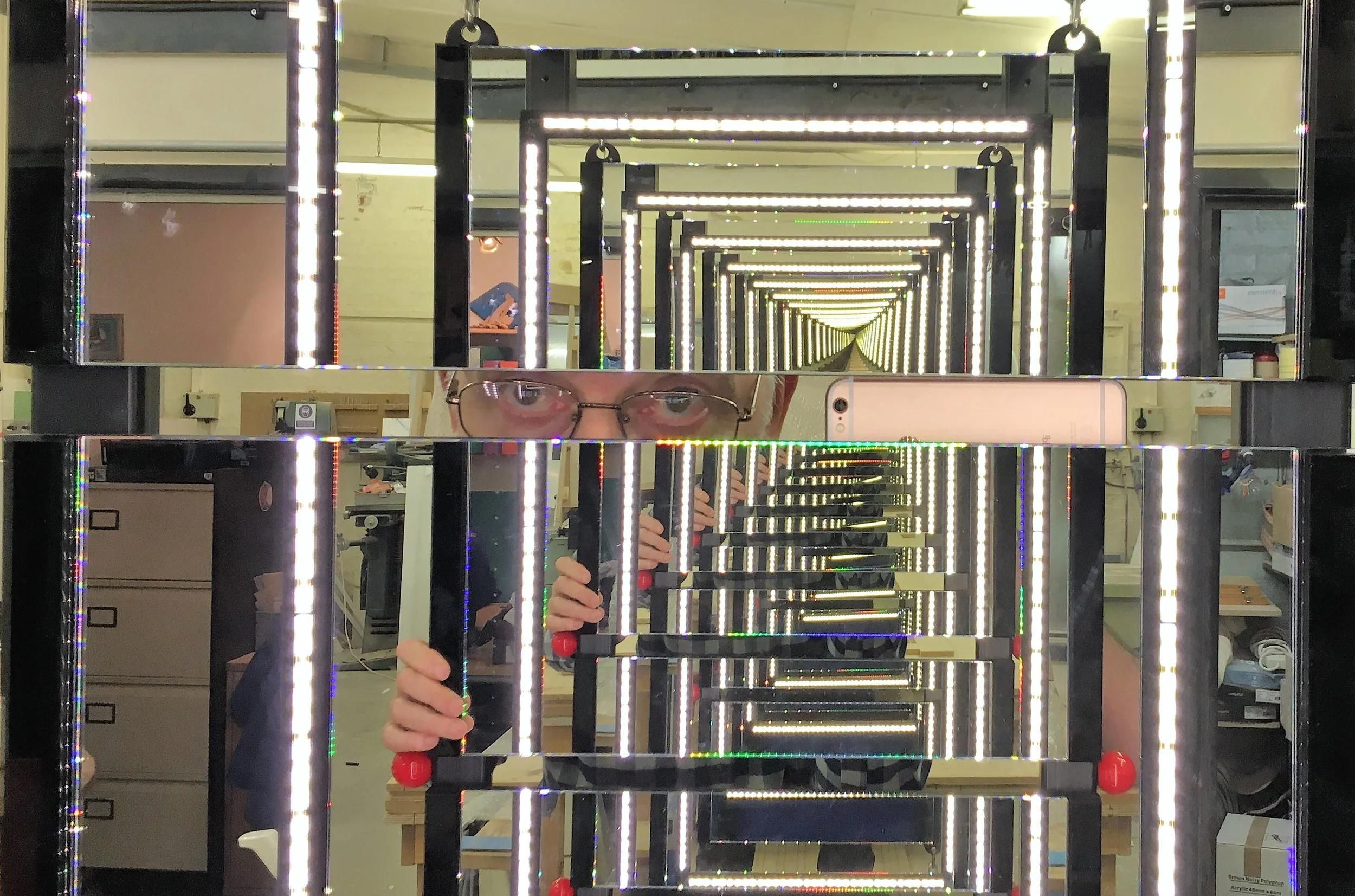
More Light interactives

"Academic" interactives: The Energy Enzyme

"Academic interactives": Electron beams

"Academic interactives": Mantle geology

Working canal-lock model

Virtual exhibit: Ich bin einmalig

Chemistry interactives: Chirality

Video microscopes: Melting crystal

Push-button quiz: Breath of life

Environmental & biological

Cookbook outlines of my 1992 "classical" Great Explorations interactives

Talk to me!

UK phone/fax
+44 (0) 1663 743794

Email ian@interactives.co.uk


The Energy Enzyme

A 'high-tech' mobile exhibition for Daresbury Laboratory, Cheshire; associated with the Rutherford Appleton Laboratory in Oxfordshire.

Completed in Spring 1998, this complex project was conceived, designed, fabricated and installed within a single month.

The Synchrotron Radiation Source at Daresbury was the first in the world. More recently it was a crucial tool in discovering the awesomely intricate structure of part of the ATP synthase molecule: work which was rewarded by a shared Nobel Prize in 1997.

The brief for this exhibition was to find an effective way to demonstrate the importance of Daresbury Laboratory in contributing to this prestigious discovery. Some kind of interactive exhibit was indicated, but very much a high-level one for adults instead of the usual youthful audience. Even so, it was still necessary to stop people in their tracks, then capture and hold their attention long enough to convey the necessary message.

Touch screen information point

Experience of designing highly appealing exhibits for children turned out to be extremely valuable once again. The Energy Enzyme exhibition was made in three parts: a well-illustrated graphics panel with an overview of the story; a touch-screen computer 'kiosk' with detailed information about the molecule and its discovery; and a stunning 'mechanical-multimedia' model of the molecule to 'hook' people's attention and give an instant feel for the concept..

"The Energy Enzyme" interactiveMechanical model of the molecule

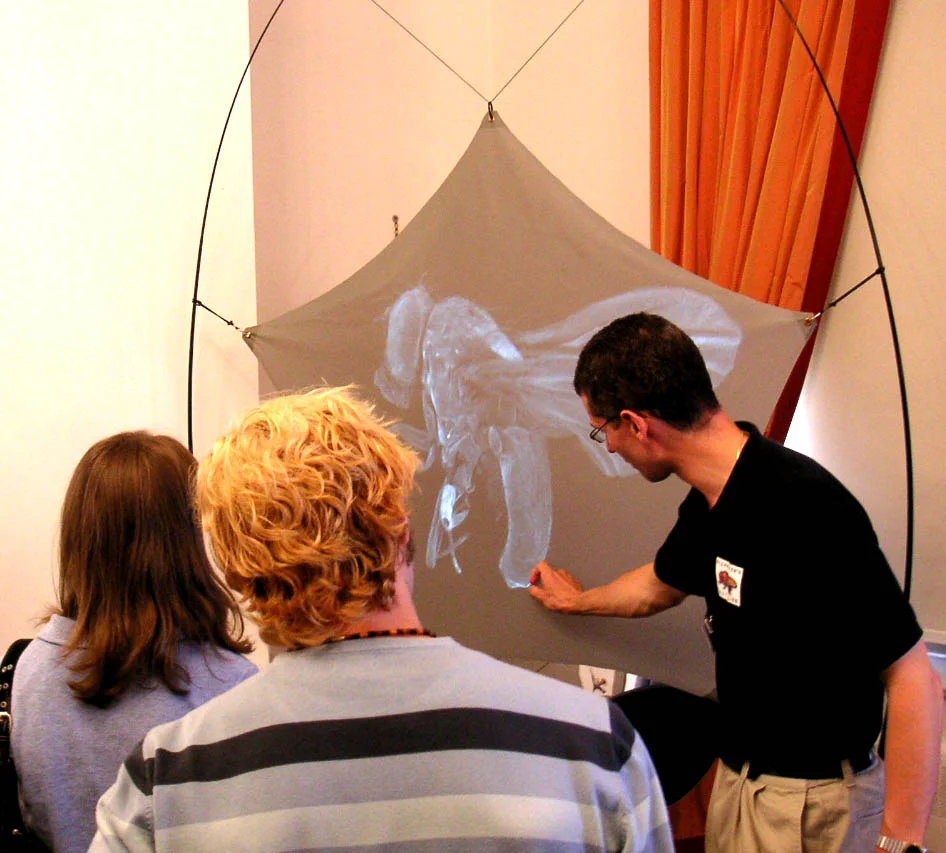
A black, "floating", interactive, back-projection screen (Click for larger image)

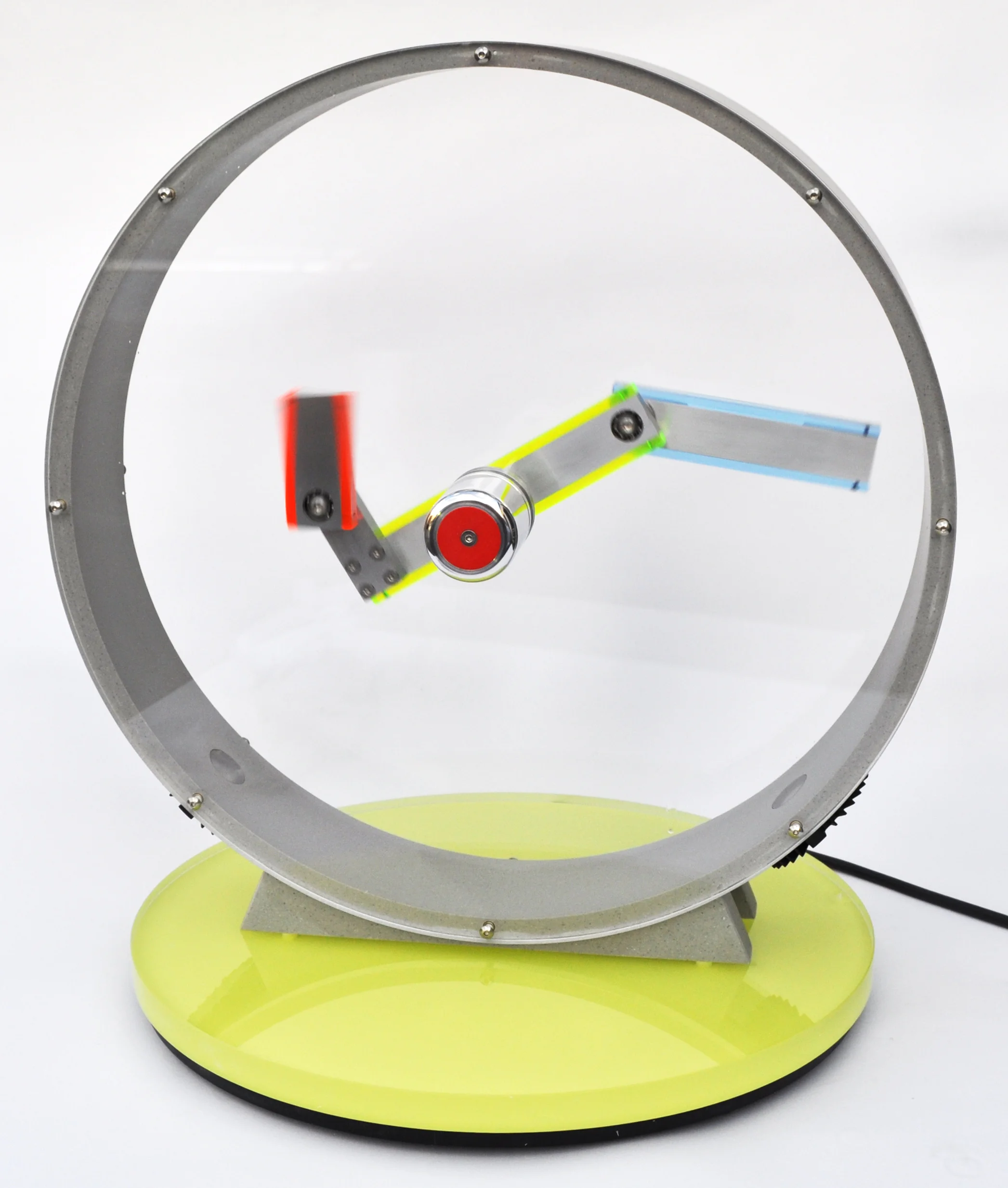
This was the most spectacular part and consisted of a backlit, mechanical model using cogs and cams to demonstrate the amazing rotating mechanism now known to exist inside this molecular factory 'assembly-line' for producing ATP. But the clever bit was that this working model was actually connected to a beautiful, computer-generated 3-d image of the ATP synthase molecule projected onto a sophisticated, black, back-projection screen suspended between curved carbon-fibre rods. As visitors turned the mechanical model, so the projected image of the molecule rotated, convulsed, and audibly squelched on the screen, like a heap of multicoloured spaghetti.

Science Minister, John Battle, could not resist playing with it. He studied the Energy Enzyme and its message thoughtfully for a long time, and mentioned the link between Daresbury Laboratory and the Nobel Prize work in a subsequent speech. Mission accomplished!

July 1998 : the Duke of Edinburgh also liked it!