





![]() |
|
|||||||||||||||||||||||||||||||||||||||
|
|
Working canal-lock For Etruria Industrial Museum, Stoke-on-Trent, UK 2002
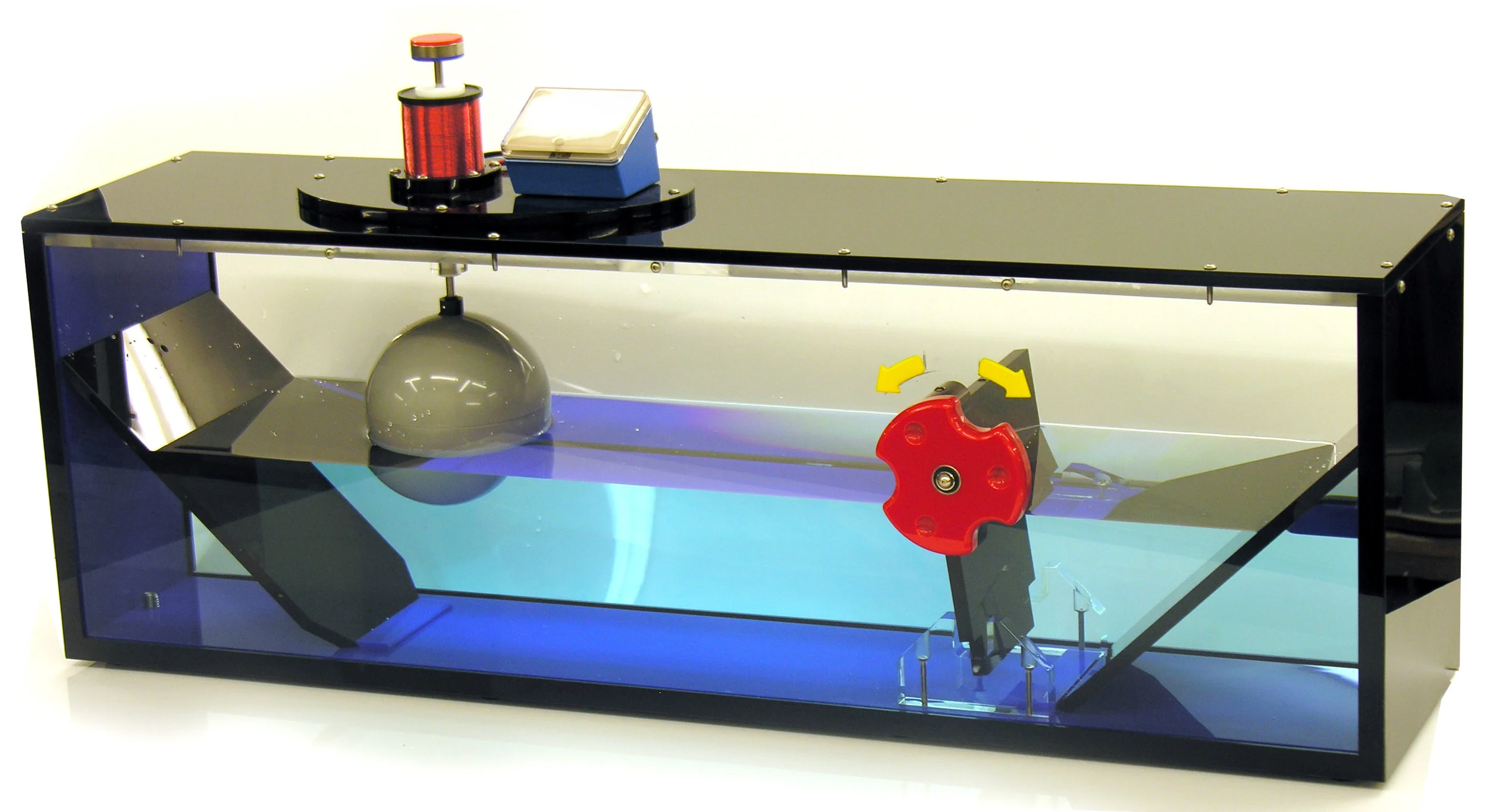
Here was an interesting challenge: to design and build a LOW-MAINTENANCE, hands-on, working canal-lock model. Of course, working canal-lock models have been made before, but they always seem to involve users getting their hands wet. Wet hands mean a wet floor, wet graphics and serious hygeine problems as bacteria rapidly transform "handled" water into a cloudy, dangerous, stinking soup of decomposing human skin particles. It took some careful thinking to come up with this dry-hands design with control knobs projecting through a 10mm toughened glass cover.
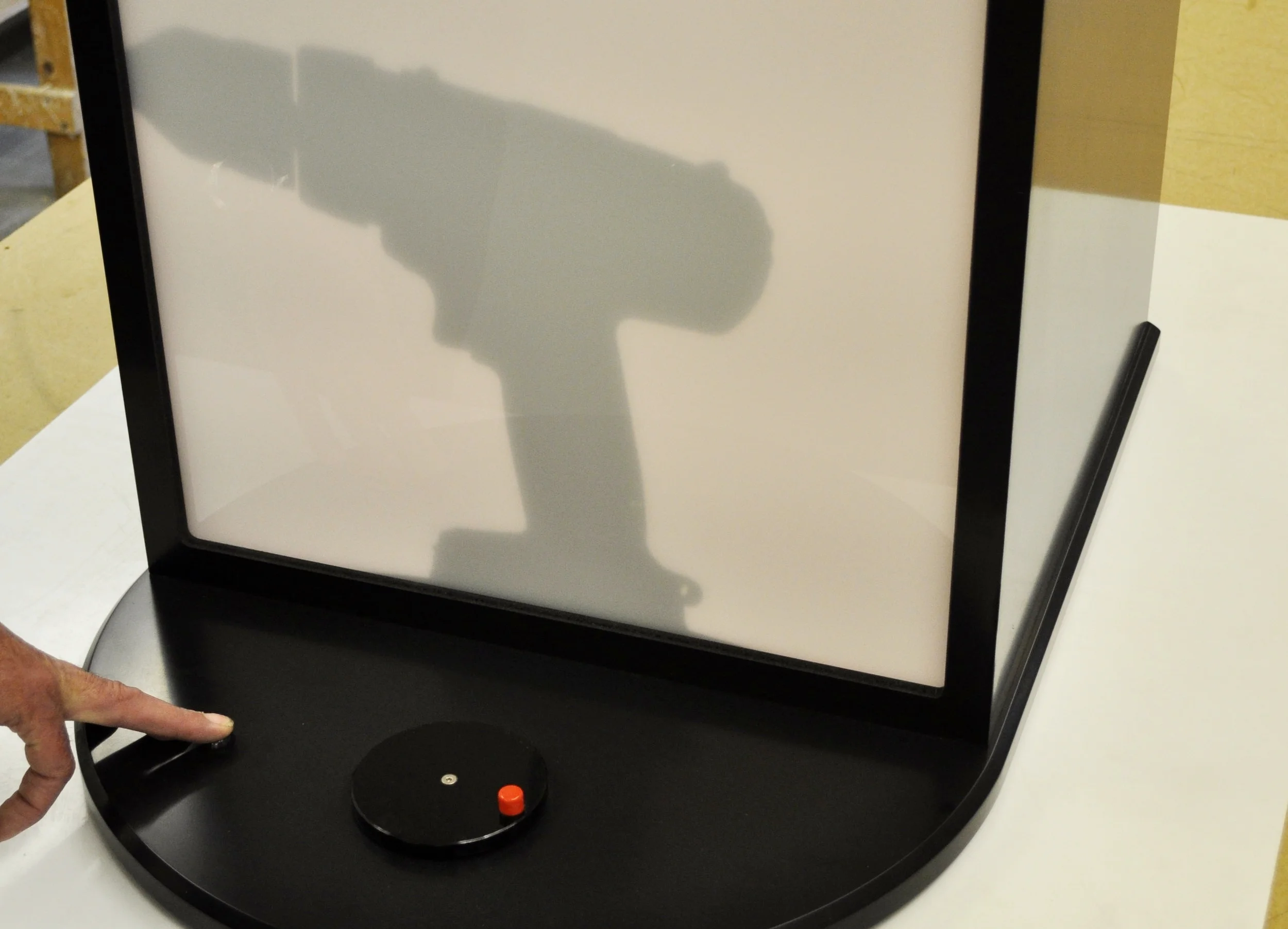
The sluice gates work just like real ones, and are opened and closed by raising and lowering the round knobs. But what about the lock gates? Water pressure prevents real lock gates from being opened unless levels are exactly the same on both sides. It would be easy to open small-scale model lock gates with water piled up against them, and I knew for sure that most children would try this for the sheer satisfaction of sending catastrophic "tidal waves" down the canal... You can see my elegant design solution in the picture above: a deliberately weak magnetic linkage that can only open a lock gate when the water levels are equal on both sides. When the level is higher on the upstream side, turning the cylindrical knob simply moves the grey magnet in the clear plastic arm without this being able to move the red magnet attached to the gate. It works really well.
Next challenge: how to move the barge without being able to touch it. Solution: another red knob on the front of the unit is attached to another magnetic assembly, out of sight inside the case. But, wait a minute, our model barge rises falls more than 150mm as the water level changes. So next we designed a solution to that... A continuously running electrical pump circulates the water.
|
|||