

"Nuts and bolts": interactive exibits

Exhibit development & fabrication

Designs & performance specifications

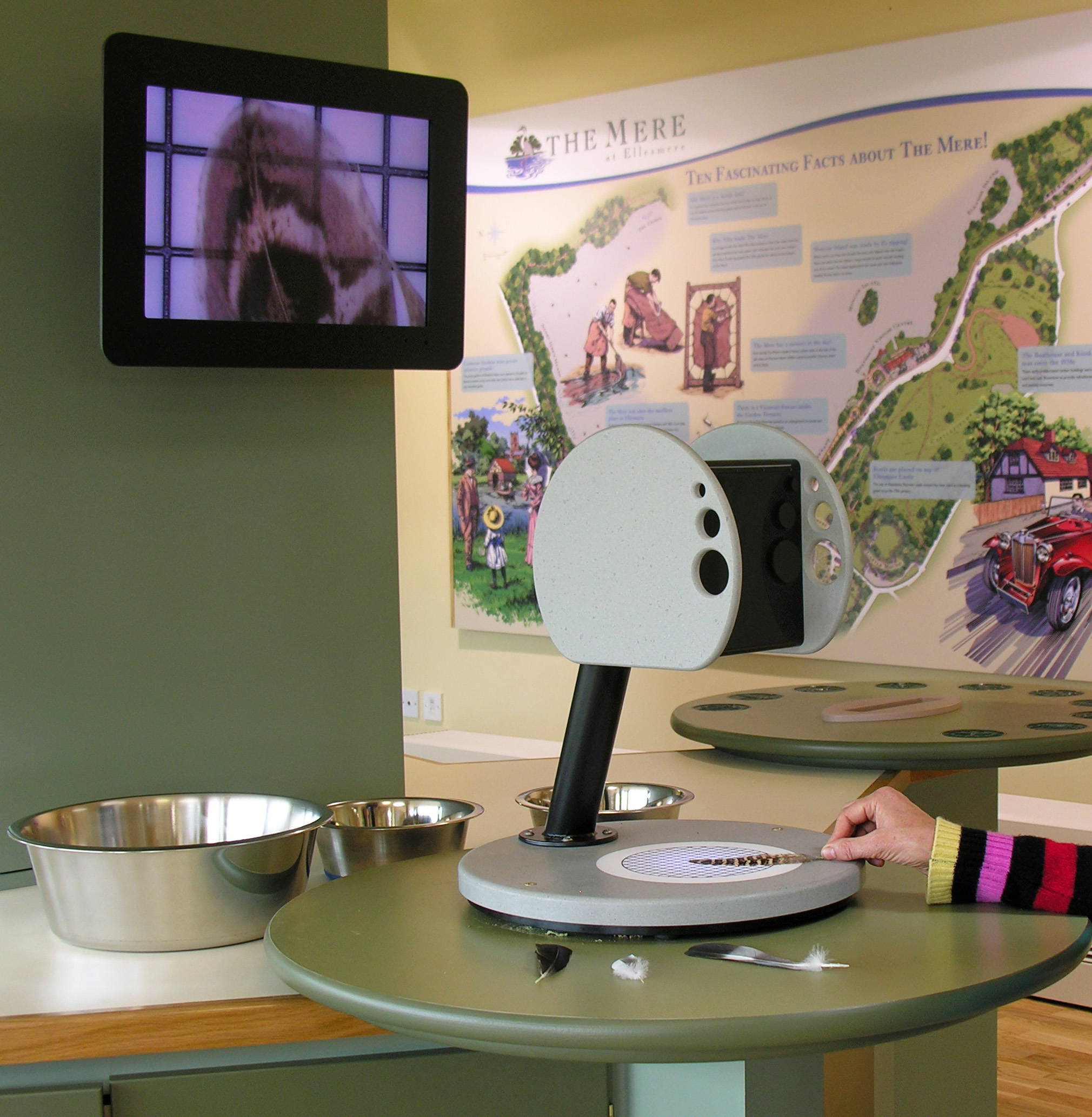
Discovery Disks: mobile mini-interactives

'Beam Cam' projecting video microscope

Underwater Street Discovery Centre

Moscow Planetarium

Sellafield Visitor Centre

'Alternative energy'

Earth Science

Fixed Discovery Disks, Glasgow

Air-table, telescope, moon-phases

Astronomy exhibits for Valencia

Biometrics

Magnetic field exhibit for CERN, Geneva

Tabletop Discovery Disks: magnetism

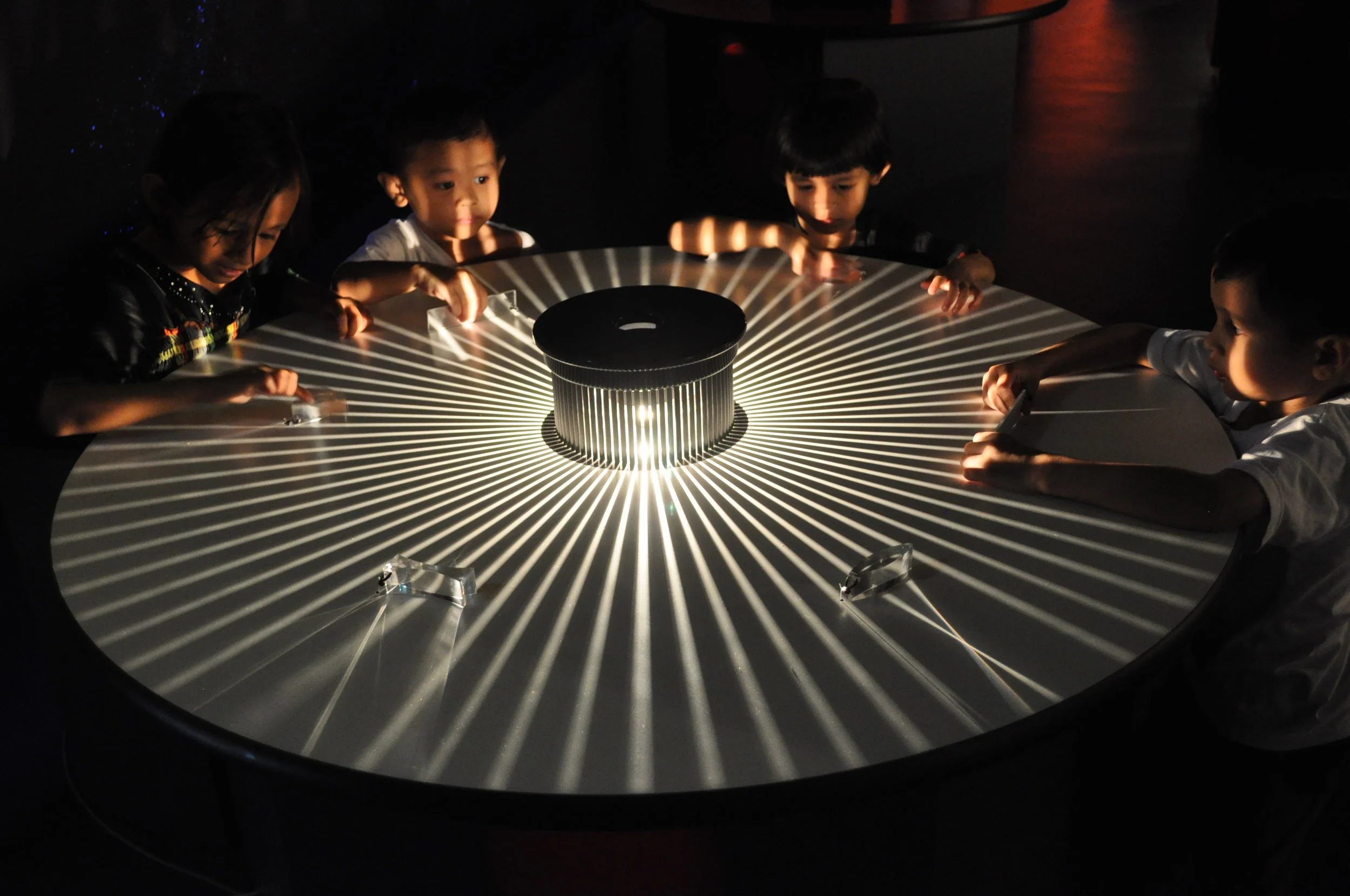
Tabletop Discovery Disks: Light

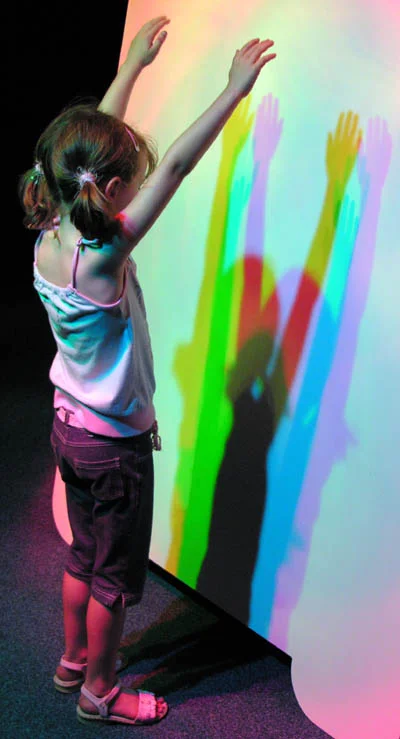
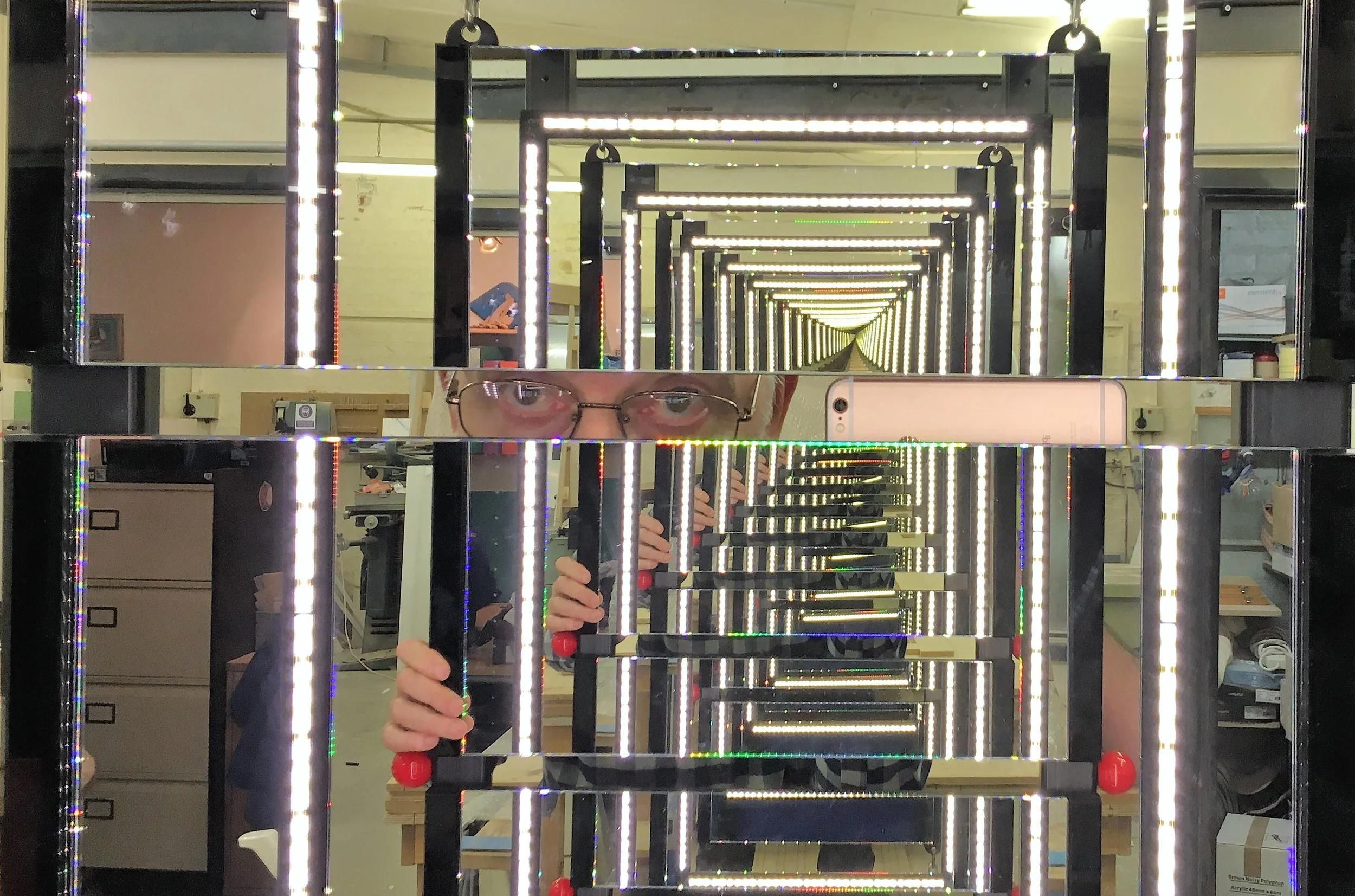
More Light interactives

"Academic" interactives: The Energy Enzyme

"Academic interactives": Electron beams

"Academic interactives": Mantle geology

Working canal-lock model

Virtual exhibit: Ich bin einmalig

Chemistry interactives: Chirality

Video microscopes: Melting crystal

Push-button quiz: Breath of life

Environmental & biological

Cookbook outlines of my 1992 "classical" Great Explorations interactives

Talk to me!

UK phone/fax
+44 (0) 1663 743794

Email ian@interactives.co.uk


Air-table, telescope, moon-phases

Exhibits for the Landesmuseum fuer Technik und Arbeit, Mannheim, Germany

Newton's Laws.

A square, low-friction surface on which plastic discs glide on a cushion of air blowing out from numerous small holes in a flat surface.

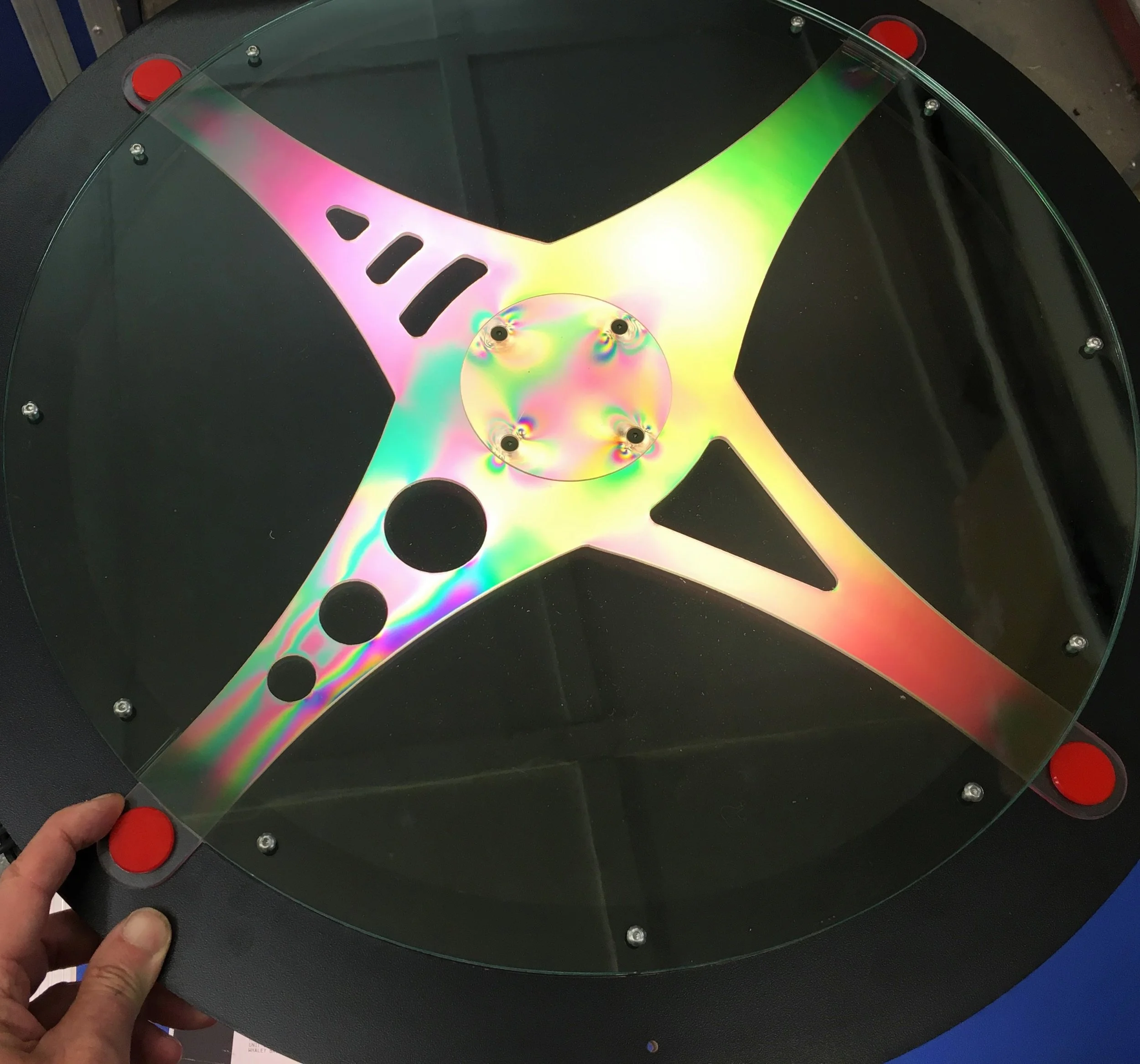
Four elastic cords are stretched across the sides, concealed beneath the overhanging rim. The gliding discs, rebounding up to thirty times from the sides, are shiny rainbow-reflective CDs. This is a truly beautiful exhibit, capturing and holding people's attention for a long time.

How a telescope works

A glass objective lens is mounted on a sliding disc inside a 400mm diameter plastic tube. The lens forms an inverted image on a circular, "opal", translucent, acrylic screen. Two handles enable the lens assembly to be focused.

The screen can be tilted forwards using a lever to the right. It is magnetically indexed in the upright and forward positions.A smaller "magnifying" lens with shorter focal length hangs from two thin chains, in front of the screen.

The "telescope" can be rotated sideways by a small amount, using the two handles. The bearing has slight friction and "stops" to limit movement.
You can examine the image on the screen through the smaller magnifying lens. While doing this, you can tilt the screen forwards, out of the way, using the red lever. Now you can still see the magnified image, even more clearly than before.

You have just assembled the components of an astronomical telescope...

Phases of the moon

A simple idea, but I think my design is original. However simple, it is still surprising how many details need to be considered.

Inside the table is a rotary damper mechanism, to prevent children from moving the moon dangerously fast. The rotating assembly is strongly engineered in welded, stainless steel. The red handle makes it immediately obvious which part to touch, and what to do with it. The moon has a special, non-shiny surface finish in just the right shade of grey. (In fact the moon actually is a dirty grey colour!) The lamp unit is symbolically stylised to represent the sun and designed to avoid overheating, despite being very bright.